
\PepsiCo South Africa Recruitment 2026
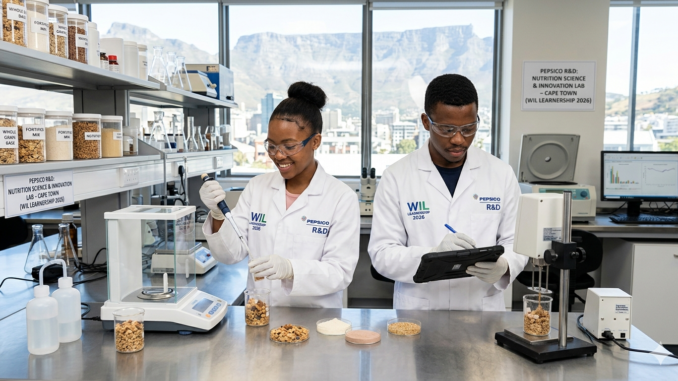
Are you a final-year student seeking workplace experience to complete your qualification? PepsiCo South Africa is inviting ambitious and talented students to apply for its Research and Development (R&D) Work Integrated Learning (WIL) Learnership Programme 2026 based in Cape Town, Western Cape.
This exciting opportunity is specifically designed for students who have completed the theoretical component of their studies and require practical workplace training to graduate. The programme offers hands-on experience within a global food and beverage company, providing learners with exposure to product development, laboratory analysis, food innovation, pilot plant operations, quality assurance, and manufacturing processes.
For students interested in Nutrition Science, Food Technology, Biochemistry, Food Science, Chemical Engineering, and related scientific fields, this learnership provides a valuable opportunity to gain industry experience while working alongside highly skilled professionals.
About PepsiCo
PepsiCo is one of the world’s largest food and beverage manufacturers, operating in more than 200 countries and territories. The company owns some of the most recognized consumer brands and continuously invests in innovation, sustainability, research, and talent development.
PepsiCo’s success is driven by its commitment to developing products that meet changing consumer needs while maintaining high standards of quality and safety. Through programmes like the R&D WIL Learnership, the company helps young graduates and students gain practical experience that prepares them for successful careers in the food and beverage industry.
Position Details
Job Title
R&D WIL Learnership (Nutrition Science)
Location
Cape Town, Western Cape, South Africa
Department
Research and Development (R&D)
Employment Type
Work Integrated Learning (WIL) Programme
Industry
Food Manufacturing and Research
Reference Number
444071
What Is a Work Integrated Learning (WIL) Programme?
Work Integrated Learning (WIL) is a structured programme that combines academic studies with practical workplace experience. The purpose is to allow students to apply classroom knowledge in a professional environment while developing technical and workplace skills.
Many universities and colleges require students to complete workplace training before obtaining their qualification. PepsiCo’s WIL programme helps students fulfil this requirement while gaining experience with one of the world’s leading food companies.
Purpose of the Learnership
The primary objective of the programme is to support the Research and Development team in delivering innovative food products and manufacturing solutions.
Learners will assist with:
- Product development projects.
- Research activities.
- Laboratory testing.
- Pilot plant trials.
- Production trials.
- Data collection and analysis.
- Technical reporting.
- Regulatory compliance activities.
This exposure allows students to gain practical understanding of how food products move from concept development to commercial production.
Main Responsibilities
Support Product Development Activities
Learners will assist R&D Technologists and Managers with the planning and execution of product development projects.
Responsibilities include:
- Supporting research activities.
- Assisting with prototype preparation.
- Participating in product evaluations.
- Assisting with ingredient testing.
- Supporting innovation initiatives.
- Helping deliver project objectives within required timelines.
Assist With Pilot Plant Trials
Pilot plants are used to test products before large-scale production begins.
Learners may:
- Prepare materials for testing.
- Collect production samples.
- Monitor product performance.
- Assist with trial setup.
- Participate in trial evaluations.
- Document observations and findings.
Support Factory Production Trials
The programme also provides exposure to commercial manufacturing environments.
Responsibilities may include:
- Attending factory trials.
- Monitoring product performance.
- Collecting production data.
- Recording test results.
- Supporting process improvement initiatives.
This experience helps learners understand large-scale food production operations.
Laboratory Testing Experience
One of the most valuable aspects of this programme is laboratory exposure.
Participants will conduct various analytical tests including:
Salt Analysis
Used to verify product seasoning levels and ensure products meet quality standards.
Oil Analysis
Helps determine oil quality and product consistency.
Moisture Analysis
Measures moisture content to ensure product quality and shelf life requirements are met.
Bulk Density Analysis
Evaluates product characteristics important for packaging and manufacturing processes.
Particle Size Analysis
Ensures ingredients meet required specifications for consistency and performance.
These tests are commonly used throughout the food manufacturing industry and provide highly valuable practical experience.
Food Innovation and Product Development Exposure
Learners will gain insight into how food products are created and improved.
Activities may include:
- New flavour development.
- Product reformulation.
- Consumer-focused innovation.
- Ingredient evaluations.
- Product performance testing.
- Shelf-life assessments.
- Manufacturing process optimization.
This exposure helps learners understand the complete product development lifecycle.
Exposure to Manufacturing and Operations
The programme provides opportunities to work closely with various business units including:
- Production teams.
- Supply Chain departments.
- Commercialisation teams.
- Quality Assurance departments.
- Regulatory Affairs teams.
- External manufacturing partners.
Working across different departments helps learners understand how a large multinational organization operates.
Environmental, Health and Safety (EHS) Involvement
Participants will support Environmental, Health and Safety initiatives within the R&D environment.
Responsibilities may include:
- Supporting safety awareness programmes.
- Following laboratory safety procedures.
- Maintaining hygiene standards.
- Assisting with compliance activities.
- Promoting good manufacturing practices (GMP).
This experience helps learners understand workplace safety requirements within food manufacturing environments.
Minimum Requirements
To qualify for the programme, applicants must:
- Be South African citizens.
- Have completed the theoretical component of their qualification.
- Be in their final year of study.
- Have achieved an average of 60% or higher.
- Be available to complete workplace training.
Relevant Qualifications
Students from the following fields are encouraged to apply:
- Nutrition Science
- Food Science
- Food Technology
- Biochemistry
- Biotechnology
- Chemical Engineering
- Process Engineering
- Agricultural Science
- Consumer Science
- Related Scientific Disciplines
Skills Required
Successful candidates should demonstrate:
Technical Skills
- Analytical thinking.
- Data interpretation.
- Scientific reasoning.
- Basic statistical knowledge.
- Attention to detail.
Personal Skills
- Strong communication abilities.
- Teamwork and collaboration.
- Initiative and creativity.
- Problem-solving skills.
- Adaptability.
- Professionalism.
- Reliability.
Leadership Potential
PepsiCo values individuals who demonstrate:
- Accountability.
- Self-motivation.
- Ownership of responsibilities.
- Continuous learning.
- Commitment to excellence.
Advantageous Qualifications
The following may strengthen your application:
- Previous laboratory experience.
- Research project participation.
- Knowledge of food manufacturing.
- Understanding of quality management systems.
- Valid driver’s licence.
- Experience using Microsoft Excel and data analysis tools.
Benefits of Joining PepsiCo
Practical Industry Experience
Gain real-world experience that employers value.
Mentorship Opportunities
Work alongside experienced scientists, technologists, engineers, and industry professionals.
Professional Skills Development
Develop workplace skills that improve employability after graduation.
Exposure to Global Standards
Learn international best practices used by one of the world’s leading food companies.
Career Development
Many students use workplace experience programmes as stepping stones toward graduate opportunities and permanent employment.
Enhanced Employability
Candidates with practical workplace experience often have a significant advantage when applying for future jobs.
Career Opportunities After Completion
The skills gained during this programme can lead to careers in:
- Food Science
- Product Development
- Research and Development
- Nutrition Science
- Quality Assurance
- Quality Control
- Process Engineering
- Regulatory Affairs
- Manufacturing Operations
- Innovation Management
- Consumer Research
These industries continue to offer strong career prospects both locally and internationally.
How to Apply
Interested applicants should submit their applications through the official PepsiCo Careers platform.
Before applying, ensure that:
- Your CV is updated.
- Academic transcripts are available.
- Contact details are accurate.
- Qualifications are clearly listed.
- Relevant achievements and projects are included.
Why You Should Apply
The PepsiCo R&D WIL Learnership 2026 is more than just workplace training—it is an opportunity to gain practical experience with a globally recognized company while building a strong foundation for a successful career in food science, nutrition, engineering, and research.
Students who participate in this programme will gain valuable technical knowledge, professional exposure, industry connections, and workplace skills that can significantly improve their future career prospects.
If you are passionate about science, innovation, food technology, and product development, this learnership could be the opportunity that helps launch your professional career.
For applications and more information, visit the official PepsiCo Careers Website.



Leave a Reply