

Thandeka Learnership Programmes 2026: Apply for Clothing, Textile and Sewing Learnership Opportunities
Are you looking for a learnership opportunity in South Africa that can help you gain practical workplace skills and a nationally recognised qualification? Thandeka offers learnership programmes designed to help unemployed and employed learners develop valuable skills for the workplace.
The programmes are particularly focused on the clothing, textiles, footwear and leather manufacturing sector, providing learners with opportunities to gain knowledge and practical skills that can be used in different areas of the industry.
For unemployed young people, finding a first opportunity to gain workplace experience can be difficult. A learnership can provide an alternative pathway by combining theoretical learning with practical workplace training. Thandeka says its learnership programmes provide unemployed learners with a supportive pathway to gain skills, earn an allowance and work towards a nationally recognised qualification.
Employed learners can also benefit from the programmes by improving their current skills or learning new skills that may help them progress in their careers.
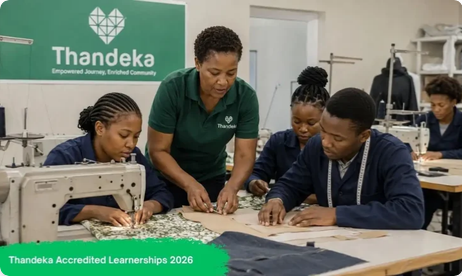
What Are Thandeka Learnership Programmes?
Thandeka’s learnership programmes are designed to develop skills among people who want to enter the clothing and manufacturing industry, as well as workers who want to improve their existing abilities.
A learnership combines structured learning with practical experience. Instead of focusing only on classroom theory, learners have an opportunity to develop skills that can be applied in a workplace environment.
According to Thandeka, its programmes can benefit both unemployed and employed learners.
Unemployed learners can use the programmes as a pathway into skills development and potentially into employment, while employed learners can use them to strengthen their existing skills or acquire additional competencies.
The programmes are also intended to benefit employers by helping businesses develop skilled employees and contribute to skills development within their communities.
Thandeka Learnerships 2026 – Quick Overview
The programmes currently highlighted by Thandeka include qualifications in clothing manufacturing, CTFL manufacturing and sewing-machine mechanics.
| Programme | NQF Level | Credits | Duration |
|---|---|---|---|
| General Certificate: Clothing Manufacturing Process | Level 1 | 120 | 12 months |
| National Certificate: Clothing, Textiles, Footwear and Leather Manufacturing | Level 2 | 120 | 12 months |
| National Certificate: Sewing Machine Mechanic | Level 3 | 122 | 12 months |
The availability of a particular programme or intake may change, so applicants should always check the latest information before applying.
1. General Certificate: Clothing Manufacturing Process – NQF Level 1
One of the programmes offered by Thandeka is the General Certificate: Clothing Manufacturing Process.
This is an NQF Level 1 qualification carrying 120 credits and has a duration of approximately 12 months.
The qualification is suitable for people who are considering a career in the clothing industry and want to develop a basic understanding of clothing manufacturing.
Learners can gain knowledge in areas related to clothing production and the business side of manufacturing.
What Can Learners Learn?
The programme can introduce learners to important concepts such as:
- Clothing manufacturing processes
- Finance
- Basic management
- Supply and demand
- Market research
- Communication
- Entrepreneurship
- Clothing-sector operations
- Workplace skills
The programme can also be useful for people who are interested in eventually operating a small clothing manufacturing business.
Who May Be Interested in This Programme?
This qualification may be particularly suitable for:
- Unemployed learners
- School leavers
- People interested in clothing manufacturing
- Entry-level manufacturing workers
- Individuals interested in entrepreneurship
- People wanting to develop basic clothing-industry skills
Thandeka’s published programme information indicates that the qualification has entry requirements relating to communication and numeracy competencies. Applicants should check the latest official programme documentation for the specific requirements before applying.
2. National Certificate: Clothing, Textiles, Footwear and Leather Manufacturing – NQF Level 2
The second qualification is the National Certificate: Clothing, Textiles, Footwear and Leather Manufacturing, commonly associated with the CTFL manufacturing sector.
This is an NQF Level 2 qualification carrying 120 credits and running for approximately 12 months.
The programme is aimed at both people entering the CTFL manufacturing industry and existing learners who want to strengthen their skills.
Areas Covered by the Programme
Depending on the learning pathway and specialisation, learners can develop practical skills relating to areas such as:
- Sewing
- Cutting
- Finishing
- Pattern making
- Clothing production
- Materials handling
- Manufacturing processes
- Quality control
- Productivity
- Workplace safety
The programme can therefore be useful for people who want to pursue different entry-level roles within the clothing and textile manufacturing industry.
Possible Career Areas
After gaining relevant training and experience, learners may be able to pursue opportunities in areas such as:
- Clothing production
- Sewing
- Cutting
- Garment finishing
- Pattern making
- Manufacturing operations
- Quality-related work
- Production support
Employment opportunities will depend on the learner’s experience, additional qualifications, employer requirements and available vacancies.
3. National Certificate: Sewing Machine Mechanic – NQF Level 3
Thandeka also lists the National Certificate: Sewing Machine Mechanic.
This is an NQF Level 3 qualification carrying 122 credits and has a duration of approximately 12 months.
Unlike a general clothing-production programme, this qualification focuses more strongly on the technical side of the industry.
It can be relevant to people who work with sewing machines and want to develop knowledge of repair and maintenance.
Who Is the Sewing Machine Mechanic Programme For?
The programme can be relevant to:
- People entering the clothing manufacturing sector
- Sewing machine operators
- Sewing machine maintenance workers
- People interested in technical manufacturing careers
- Existing workers wanting to improve their technical skills
- Individuals interested in machinery repair and maintenance
Learners can develop knowledge that relates to the operation, maintenance and repair of sewing machinery used within clothing manufacturing environments.
Benefits of Thandeka Learnership Programmes
There are several reasons why job seekers and workers may consider a Thandeka learnership.
1. Gain Practical Skills
One of the biggest benefits of a learnership is the opportunity to develop practical skills.
Instead of only studying theory, learners can develop occupational knowledge relevant to their chosen field.
For people interested in manufacturing, practical skills can be particularly important because employers often require workers who understand workplace processes and equipment.
2. Work Towards a Recognised Qualification
Thandeka states that its learnership programmes allow learners to work towards nationally recognised qualifications.
Having a recognised qualification can strengthen a CV and demonstrate that the applicant has completed structured learning in a particular field.
3. Gain Industry Knowledge
Learners can gain knowledge about how the clothing and manufacturing sector operates.
This can include production, quality, materials, machinery, communication and workplace procedures.
4. Opportunity for an Allowance
Thandeka states that unemployed learners can earn an allowance while participating in its learnership programmes.
However, applicants should not assume that a specific allowance amount applies to every programme. Funding arrangements and allowance amounts can differ between programmes and intakes.
Always confirm the allowance directly through the official programme information.
5. Improve Your CV
For unemployed job seekers, having a learnership on a CV can demonstrate initiative, willingness to learn and exposure to occupational training.
A completed qualification can also give candidates an additional credential when applying for suitable employment opportunities.
6. Develop Workplace Confidence
Starting a career can be intimidating, particularly for young people with little or no previous work experience.
A structured learning environment can help learners become more comfortable with workplace expectations, communication and professional responsibilities.
Who Can Benefit From These Learnerships?
Thandeka’s programmes are designed for more than one category of learner.
Unemployed Learners
Unemployed people can use learnership opportunities to gain occupational skills and work towards a recognised qualification.
This can be particularly valuable for young South Africans who have completed school but have not yet found employment.
New Industry Entrants
People who have never worked in the clothing manufacturing sector can use relevant training to develop an understanding of the industry.
Employed Learners
Existing employees can also participate in skills development programmes to improve their current abilities or develop new skills.
Manufacturing Workers
People already working in clothing factories may benefit from training that strengthens their technical, production or supervisory abilities.
What Skills Should Applicants Have?
The exact requirements depend on the qualification, but candidates who want to work in manufacturing can benefit from having:
- A willingness to learn
- Good communication skills
- Basic numeracy
- Ability to follow instructions
- Good attention to detail
- Teamwork skills
- Reliability
- Punctuality
- Interest in practical work
- Ability to work safely
- Commitment to completing the programme
Applicants should carefully check the official entry requirements for the programme they want to join.
How Long Are the Thandeka Learnerships?
The three programmes highlighted on Thandeka’s learnership page have a duration of approximately 12 months.
This means learners should be prepared to commit to the full programme and meet attendance, learning and assessment requirements.
Completing a learnership requires commitment. Applicants should make sure they understand the programme schedule, location, learning requirements and other conditions before enrolling.
Does Thandeka Offer Learnerships for Unemployed People?
Yes. Thandeka states that its learnership programmes provide unemployed learners with a pathway to gain valuable skills, earn an allowance and work towards a nationally recognised qualification.
However, this does not mean that every programme is permanently open for unemployed applicants.
Learnerships are generally linked to specific intakes, funding arrangements and participating employers or organisations.
For this reason, job seekers should check whether applications are currently open before submitting an application.
How to Apply for Thandeka Learnerships
Thandeka directs learners to apply through its Learner Application Portal.
Applicants should use the official application process and follow the instructions provided for the relevant programme.
Before applying, prepare your information and supporting documents.
These may include:
- South African ID or valid identification
- Matric certificate or other educational certificates
- Updated CV
- Contact details
- Proof of previous learning, where applicable
- Other documents requested by the programme
The documents required can differ depending on the qualification and intake.
Step-by-Step Application Guide
Step 1: Check the Programme
Decide which qualification best matches your education, interests and career goals.
Step 2: Check the Requirements
Read the entry requirements carefully before starting your application.
Step 3: Prepare Your Documents
Make sure your documents are clear and contain accurate information.
Step 4: Complete the Learner Application
Use the official learner application process and complete all required fields.
Step 5: Submit Your Application
Review your information before submitting the application.
Step 6: Wait for Communication
If you are shortlisted or selected, follow the instructions provided by the organisation.
Important Advice for Applicants
Job seekers should be careful when applying for learnerships advertised on social media or third-party websites.
Always verify the information through the official organisation.
Do not pay a person who promises to secure a learnership for you.
A legitimate learnership opportunity should have clear information about the training provider, programme, requirements and application process.
Applicants should also be careful about sharing personal information with unofficial websites or individuals.
What Can You Do After Completing a Learnership?
Completing a learnership does not automatically guarantee permanent employment.
However, it can provide learners with a combination of theoretical knowledge, occupational skills and practical experience that may help when applying for future opportunities.
Depending on the qualification, graduates can look for suitable opportunities in areas related to:
- Clothing manufacturing
- Textile production
- Sewing
- Garment production
- Cutting
- Finishing
- Pattern making
- Sewing-machine maintenance
- Manufacturing operations
- Production support
Some learners may also use their knowledge to pursue further studies or additional skills programmes.
Thandeka Learnerships and Career Development
Skills development is important in South Africa because employers need people with practical and occupational skills.
A learnership can help bridge the gap between education and employment by giving learners exposure to skills that are relevant to a specific industry.
The clothing and textile industry requires workers with different types of skills, from sewing and garment production to machinery maintenance, quality control and production management.
For this reason, learners who are interested in practical careers may find manufacturing-related training worth considering.
Frequently Asked Questions About Thandeka Learnerships
Is Thandeka offering learnerships in 2026?
Thandeka lists learnership programmes on its website, but the availability of specific funded intakes can change. Applicants should check the official learner application portal for current opportunities.
What qualifications are available?
The listed programmes include the General Certificate: Clothing Manufacturing Process at NQF Level 1, the National Certificate: Clothing, Textiles, Footwear and Leather Manufacturing at NQF Level 2, and the National Certificate: Sewing Machine Mechanic at NQF Level 3.
How long do the programmes take?
The three programmes listed have a duration of approximately 12 months.
Do unemployed learners receive an allowance?
Thandeka states that unemployed learners earn an allowance while participating in its learnership programmes. The actual allowance and conditions should be confirmed for the specific programme and intake.
Do I need a university degree?
No university degree is indicated for these entry-level manufacturing qualifications. However, each qualification has its own entry requirements, so applicants should check the specific programme before applying.
Can employed people apply?
Thandeka states that its programmes can also support employed learners who want to improve existing skills or acquire new ones.
Are these programmes only for people who can sew?
Not necessarily. The programmes cover different areas of the clothing and manufacturing sector. For example, the Sewing Machine Mechanic qualification focuses on machinery repair and maintenance, while other programmes cover broader manufacturing skills.
Does completing a learnership guarantee a job?
No. A learnership can provide valuable skills and experience, but employment after completion depends on available vacancies, the learner’s performance, qualifications and employer requirements.
Final Thoughts on Thandeka Learnership Programmes 2026
Thandeka’s learnership programmes provide an opportunity for unemployed and employed learners to develop skills connected to the clothing, textiles and manufacturing industries.
The programmes currently highlighted include an NQF Level 1 General Certificate in Clothing Manufacturing Process, an NQF Level 2 National Certificate in Clothing, Textiles, Footwear and Leather Manufacturing, and an NQF Level 3 National Certificate in Sewing Machine Mechanics.
All three listed qualifications have a duration of approximately 12 months, giving learners an opportunity to spend a significant period developing industry-related knowledge and skills.
For unemployed South Africans looking for practical training, these opportunities may be worth investigating. However, applicants should remember that the existence of a programme on the website does not necessarily mean that applications for a new intake are currently open.
Always check the latest information, requirements and application instructions before submitting your application.
Looking for More Opportunities?
If you are searching for learnerships, internships, bursaries, general worker jobs, government vacancies and jobs for matriculants in South Africa, keep checking seta-services.co.za for new opportunities.
Important: Application dates, programme availability, requirements and allowances may change. Always verify the latest information through the official organisation before applying.




Leave a Reply