
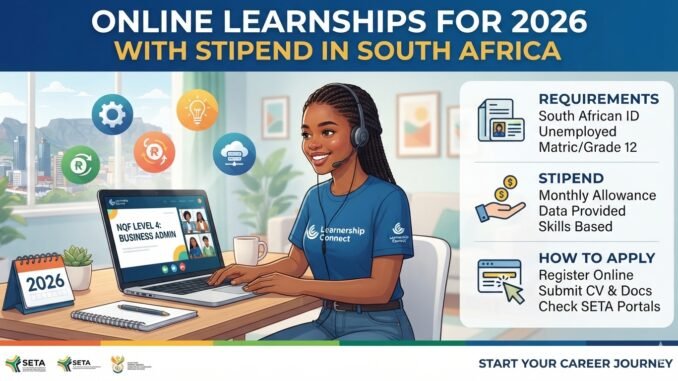
Online Learnerships for 2026 With Stipend in South Africa: Requirements and How to Apply
Finding a job without work experience can be difficult, especially for young South Africans who have completed school but have not yet had the opportunity to enter the workplace. Online learnerships for 2026 with a stipend can provide an alternative route for people who want to gain skills, workplace exposure and a recognised qualification while receiving financial support where a stipend is offered.
For unemployed youth, matriculants and entry-level job seekers, a learnership can be an important first step towards building a stronger CV and developing practical workplace skills. Some programmes offer online or blended learning, meaning learners may be able to complete part of their theoretical training remotely.
However, applicants should understand that online does not always mean completely work-from-home. Depending on the programme, learners may still have to attend workplace training, practical activities, assessments or other sessions at a physical location.
In this guide, we explain what online learnerships are, who can apply, whether they pay a stipend, what documents you may need, where to look for opportunities and how to submit a stronger application.
What Is an Online Learnership?
A learnership is a structured training programme that combines theoretical education with practical workplace experience.
An online learnership delivers some or most of the theoretical component through digital platforms rather than requiring learners to attend a physical training centre every day.
Depending on the programme, online learning may include:
- Online learning portals
- Virtual classroom sessions
- Video lessons
- Digital assignments
- Online assessments
- Microsoft Teams or Zoom sessions
- Email communication with facilitators
- Workplace-based practical training
The exact structure depends on the employer, training provider and qualification.
Some programmes can be completed largely online, while others use a blended learning model combining online studies with practical workplace experience.
Applicants should therefore read the complete learnership advertisement carefully before applying.
Do Online Learnerships for 2026 Pay a Stipend?
Many funded learnership programmes provide learners with a monthly stipend or learner allowance.
A stipend can help learners manage some of the costs associated with participating in a programme, including:
- Data and internet access
- Transport
- Meals
- Personal expenses
- Training-related costs
However, not every learnership pays the same stipend, and some programmes may not offer a stipend at all.
The amount can depend on the employer, training provider, SETA, qualification level, programme structure and funding agreement.
For this reason, job seekers should never assume that an online learnership automatically comes with a specific monthly payment.
If a stipend is confirmed, the amount and payment conditions should normally be stated in the official advertisement, learner agreement or offer provided to successful applicants.
Who Can Apply for Online Learnerships in 2026?
Requirements differ from one learnership to another.
Many entry-level programmes are aimed at South Africans who want to gain formal workplace experience, particularly young people and people entering the labour market for the first time.
Depending on the opportunity, common requirements may include:
- South African citizenship or the legal right to participate
- A valid South African ID
- Grade 12 or Matric
- Grade 10 or Grade 11 for selected programmes
- Basic computer literacy
- Access to a smartphone, laptop or computer
- Reliable internet access
- The ability to communicate in English
- Willingness to complete assessments
- Willingness to complete practical training
- Availability for the full duration of the programme
Some learnerships specifically target unemployed youth, while others may have different eligibility criteria.
Employers can also introduce their own requirements relating to age, location, education level and employment status. Always check the requirements of the specific learnership before submitting an application.
Popular Online Learnership Fields in 2026
Online and blended learning can be used in several career fields. The availability of programmes changes throughout the year depending on which employers and accredited training providers are recruiting.
1. Business Administration Learnerships
Business administration learnerships can introduce learners to important office and administrative skills.
Training may include:
- Office procedures
- Filing
- Record keeping
- Communication
- Customer service
- General administrative duties
These programmes may be suitable for people interested in careers such as administration, reception, office assistance and clerical work.
2. Information Technology Learnerships
IT learnerships can help learners develop digital and technical skills.
Depending on the programme, training may cover areas such as:
- Technical support
- Software
- Systems development
- Cybersecurity
- Cloud technologies
- General digital skills
People interested in technology should regularly check opportunities advertised by technology companies and skills-development organisations.
3. Contact Centre Learnerships
Contact centre and customer-service programmes can often include online training.
Learners may receive training in:
- Customer communication
- Telephone etiquette
- Handling customer queries
- Complaint resolution
- Digital customer-support systems
These skills can be useful for people hoping to enter call centre and customer service careers.
4. Banking and Financial Services Learnerships
Banks, insurance companies and other financial institutions use learnerships to develop entry-level talent.
Training can include:
- Customer service
- Financial products
- Administration
- Compliance
- Sales
- Banking operations
5. Digital Marketing Learnerships
Digital marketing programmes may introduce learners to the growing online economy.
Training can include:
- Social media
- Content creation
- Online advertising
- Search engine marketing
- Analytics
- Basic website management
6. Project Management Learnerships
Some project management qualifications include substantial online coursework.
Learners may study:
- Planning
- Scheduling
- Administration
- Communication
- Budgeting
- Project coordination
7. Human Resources Learnerships
Human resources programmes can introduce learners to the basics of working with employees and workplace administration.
Possible areas include:
- Recruitment
- Employee records
- Workplace administration
- Basic human-resource practices
The fields available will depend on the employers and accredited training providers recruiting at the time.
Why Should You Consider an Online Learnership?
One of the main advantages of online learning is flexibility.
Instead of travelling to a training institution every day, learners may be able to complete much of the theoretical component from home.
Other potential benefits include:
- Structured skills training
- Practical workplace experience
- A recognised qualification
- Valuable experience for your CV
- Improved computer and digital skills
- A stipend where one is provided
- Professional references
- Improved preparation for entry-level employment
For someone who has never had a formal job, workplace exposure can be particularly valuable.
However, applicants should remember that completing a learnership does not guarantee permanent employment. Some companies may employ successful learners after completion, while others use learnerships primarily for skills development.
Documents to Prepare Before Applying
If you intend to apply for several learnerships during 2026, it is a good idea to prepare your documents before applications open.
You may need:
- An updated CV
- South African ID
- Matric certificate or latest qualification
- Academic results where required
- Proof of address if requested
- Certificates from previous courses
- Disability documentation where specifically requested
Keep electronic copies of your documents ready.
PDF is generally a useful format for applications unless the employer specifically requests another format.
Your CV should also contain an active cellphone number and professional email address.
Example CV File Names
Use clear file names when uploading documents.
For example:
Name-Surname-CV.pdf
Name-Surname-Matric-Certificate.pdf
Clear file names make it easier to identify your documents when completing online applications.
How to Apply for Online Learnerships for 2026
The application process will depend on the employer or training provider, but many applications are completed online.
Step 1: Find a Suitable Learnership
Search for programmes that match your education, location, career interests and skills.
Do not apply without checking the minimum requirements.
Step 2: Read the Full Advertisement
Before applying, check:
- Minimum qualification
- Age requirement, if applicable
- Location
- Learnership duration
- Closing date
- Stipend information
- Required documents
- Application method
This can help you avoid applying for opportunities for which you do not qualify.
Step 3: Update Your CV
Make sure your CV is current and easy to read.
If you have no work experience, do not leave your CV empty. Include relevant education, school achievements, computer skills, volunteer activities and completed short courses where applicable.
Step 4: Complete the Online Application
Enter your information carefully.
Check your:
- ID number
- Email address
- Cellphone number
- Qualifications
- Personal details
before submitting.
Step 5: Upload the Correct Documents
Upload clear copies of the documents requested by the employer.
Avoid submitting blurry photographs when you have access to clear scanned copies.
Step 6: Submit Before the Closing Date
Do not wait until the final day if you can submit earlier.
Recruitment websites can become busy, and technical problems can sometimes prevent applicants from completing an application before the deadline.
Where Can You Find Online Learnerships in South Africa?
Learnership opportunities open and close throughout the year, so job seekers should regularly monitor legitimate recruitment channels.
Places to check include:
- Official company career websites
- SETA-related opportunities
- Accredited training providers
- Government youth-employment platforms
- Major South African recruitment portals
- Company LinkedIn pages
- University and TVET College career offices
- Trusted South African jobs and learnership websites
Where possible, verify an opportunity through the organisation’s official website before submitting personal information.
Can You Apply for a Learnership Without Work Experience?
Yes.
Many learnerships are specifically designed for people who have little or no previous work experience.
For entry-level opportunities, employers may focus on whether applicants meet the educational requirements, can complete the programme and demonstrate a willingness to learn.
This is one reason learnerships can be useful for matriculants, unemployed youth and first-time job seekers who are struggling to get their first opportunity.
Having no previous job should not automatically stop you from applying when the advertisement allows applicants without experience.
How to Improve Your Chances of Being Selected
Learnership opportunities can attract many applicants, so your application should be complete and accurate.
You can improve your application by:
- Applying only when you meet the minimum requirements.
- Keeping your CV updated.
- Checking your spelling and contact information.
- Uploading clear documents.
- Using a professional email address.
- Monitoring your email after applying.
- Monitoring your cellphone for possible communication.
- Completing online assessments before their deadlines.
- Researching the company before an interview.
- Applying for several legitimate opportunities that match your qualifications.
Most importantly, follow the employer’s instructions exactly.
Beware of Fake Learnerships and Scams
Job seekers should be extremely careful when looking for learnerships on social media, WhatsApp groups and messaging platforms.
A legitimate employer or training provider should explain clearly how applications are submitted.
Be suspicious if someone asks you to pay money simply to:
- Apply for a learnership
- Secure an interview
- Reserve a position
- Receive an application form
- Guarantee that you will be selected
Never provide recruiters with sensitive banking information such as your online banking password, PIN or one-time password.
If you are unsure whether an opportunity is genuine, verify it through the organisation’s official channels before submitting personal information.
Frequently Asked Questions About Online Learnerships for 2026
Are online learnerships free?
Funded learnerships generally do not require selected learners to pay tuition fees. However, arrangements differ between programmes, so applicants should read the official terms and conditions carefully.
Can I do an online learnership from home?
Some programmes allow most learning activities to be completed remotely. Others require workplace attendance, practical training or occasional face-to-face sessions.
Do I need Matric to apply?
Not always.
Some learnerships require Grade 12, while others may accept applicants with Grade 10, Grade 11 or another relevant qualification. The minimum requirement depends on the specific programme.
Do all learnerships offer a stipend?
No.
Stipend arrangements differ between programmes. Always check the official advertisement or learner agreement for confirmed payment information.
Can I apply for more than one learnership?
Yes, unless the specific employer states otherwise.
Applying for several legitimate opportunities that match your qualifications can give you more chances to secure a training opportunity.
Can I apply if I have no work experience?
Yes.
Many learnerships are designed to provide young people and first-time job seekers with training and workplace exposure.
Ubelong Learnership
SPECCON Learnership
Final Thoughts on Online Learnerships for 2026
Online learnerships for 2026 with a stipend can be an important opportunity for South Africans who want to gain skills, workplace experience and a recognised qualification.
For unemployed job seekers and people trying to enter the labour market for the first time, a learnership can help bridge the gap between education and employment.
The important thing is not to wait for one perfect opportunity.
Prepare your CV and supporting documents early. Check legitimate recruitment platforms regularly and apply as soon as you find a learnership that matches your qualifications.
Remember that online learnerships are not all the same. Some may be completely remote, while others combine online theoretical learning with workplace-based practical experience. Requirements, stipends and programme durations can also vary.
Always read the official advertisement before applying, check the closing date and never pay anyone who claims they can guarantee you a learnership position.
For South African job seekers, a legitimate learnership can be more than just temporary training. It can be the first step towards gaining experience, developing confidence and building a long-term career.
This version keeps the original article’s key points while making it more suitable for search traffic around “online learnerships 2026,” “online learnerships with stipend,” “learnerships in South Africa,” “learnerships for unemployed youth,” and related searches.




Leave a Reply